
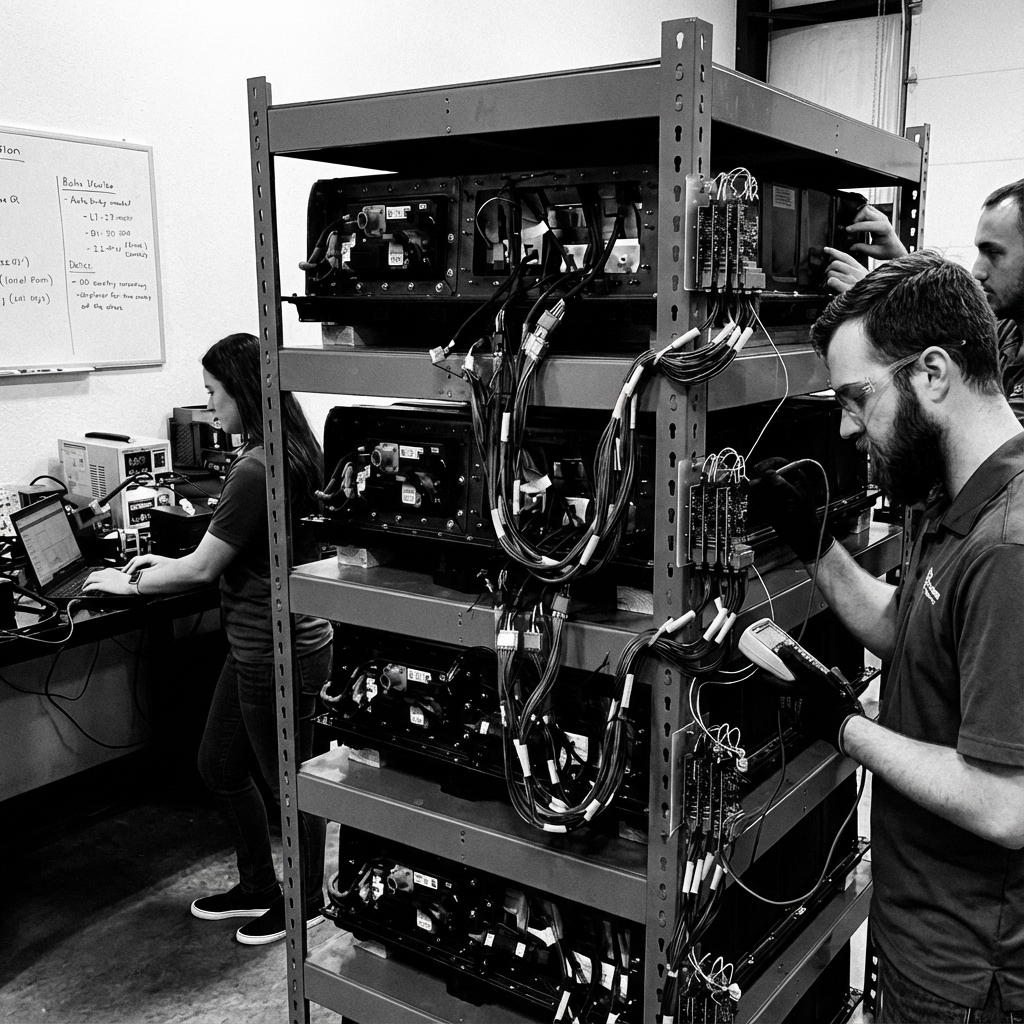
Mission-Critical
BMS Engineering.
Mission-critical BMS engineering for energy storage systems. One partner, from concept to certified deployment.
What is a Battery Management System?
A Battery Management System (BMS) is an electronic control unit that monitors and regulates battery cell voltage, temperature, and current in real-time. The BMS protects lithium-ion, sodium-ion, and other chemistries from overcharge, overdischarge, and thermal runaway—ensuring safe, efficient energy storage. Enterprise BMS handles safety across utility-scale installations with sub-millisecond response times and multi-layer fault isolation.
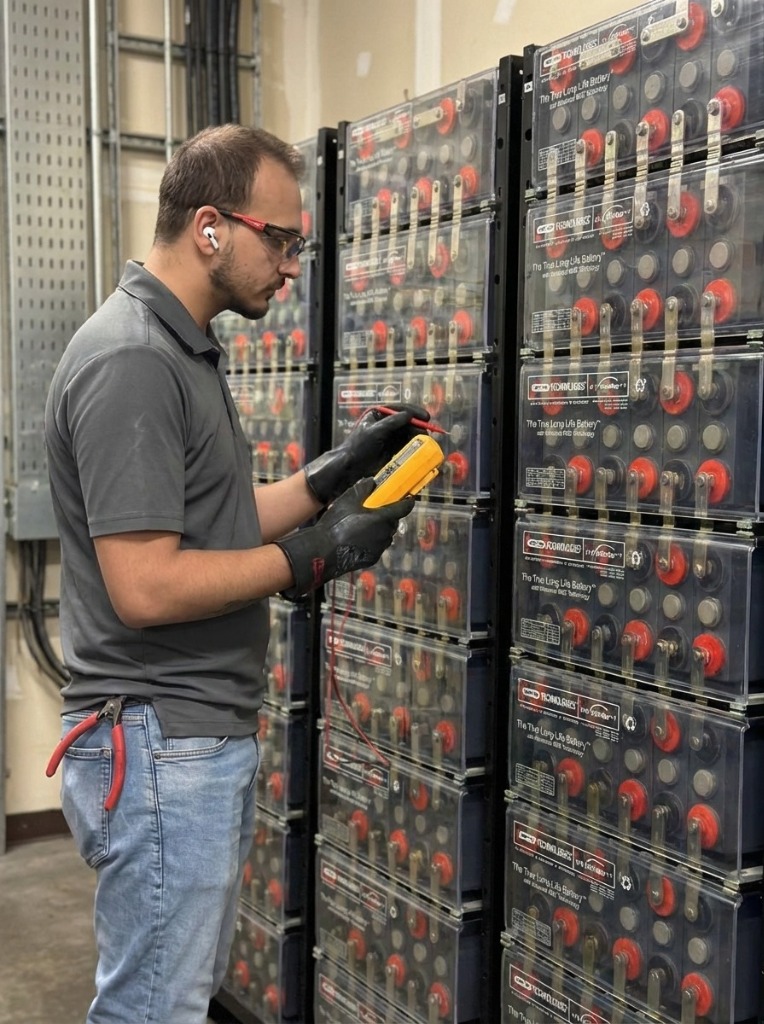
The Grid-Scale Reality.
Any firm can design a PCB. But engineering a system that survives 20 years of thermal cycling, grid faults, and capacity degradation requires a different class of experience.
Scale is Exponential, Not Linear
Scaling from a 10kWh residential unit to a 100MWh utility site isn't just about adding more modules. Communication latency, data throughput, and fault propagation risks increase exponentially. We design deterministic architectures where 1ms latency means 1ms, regardless of system size.
SoC Under Load Is a Different Problem
Open-circuit voltage lookup works in the lab. Under real load, IR drop and polarization distort every reading. Coulomb counting drifts without correction. Accurate state estimation requires fusing multiple methods — and knowing when to trust which one.
Thermal Runaway is Too Late
If you're reacting to a fire, the system has already failed. True protection lies in catching the precursors—micro-shorts, impedance shifts, and gas generation—long before thermal limits are breached.
Safety as Architecture.
Reliability cannot be a software patch. We implement a multi-layer defense strategy where each layer operates with complete autonomy.
Cell-Level Measurement
- High-accuracy voltage & temperature sensing
- Open-wire detection with automatic fault isolation
- Redundant communication paths
Rack-Level Supervision
- Independent hardware watchdogs
- Contactor health monitoring & weld detection
- Controlled pre-charge sequencing
System-Level Intelligence
- Fault boundary containment — one rack doesn't take down the system
- EMS / PCS integration logic
- Cloud telemetry & remote diagnostics
Compliance
by Design.
We don't "add" safety features at the end. We design the architecture around the certification requirements from Day 1. This prevents costly redesigns during the UL/IEC testing phase.
Let's solve your architecture.
No sales decks. No generic feature lists. Let's look at your SLD (Single Line Diagram) and discuss how to engineer a resilient BMS for it.